

Today, the Australian Institute of Health & Safety released a timely reminder. Heat is not just uncomfortable. It is a serious workplace risk.
Extreme heat is dominating headlines again this summer. But beyond weather reports and temperature records, there is a more uncomfortable truth.
Many workplaces still treat heat as a comfort issue rather than a critical safety risk.
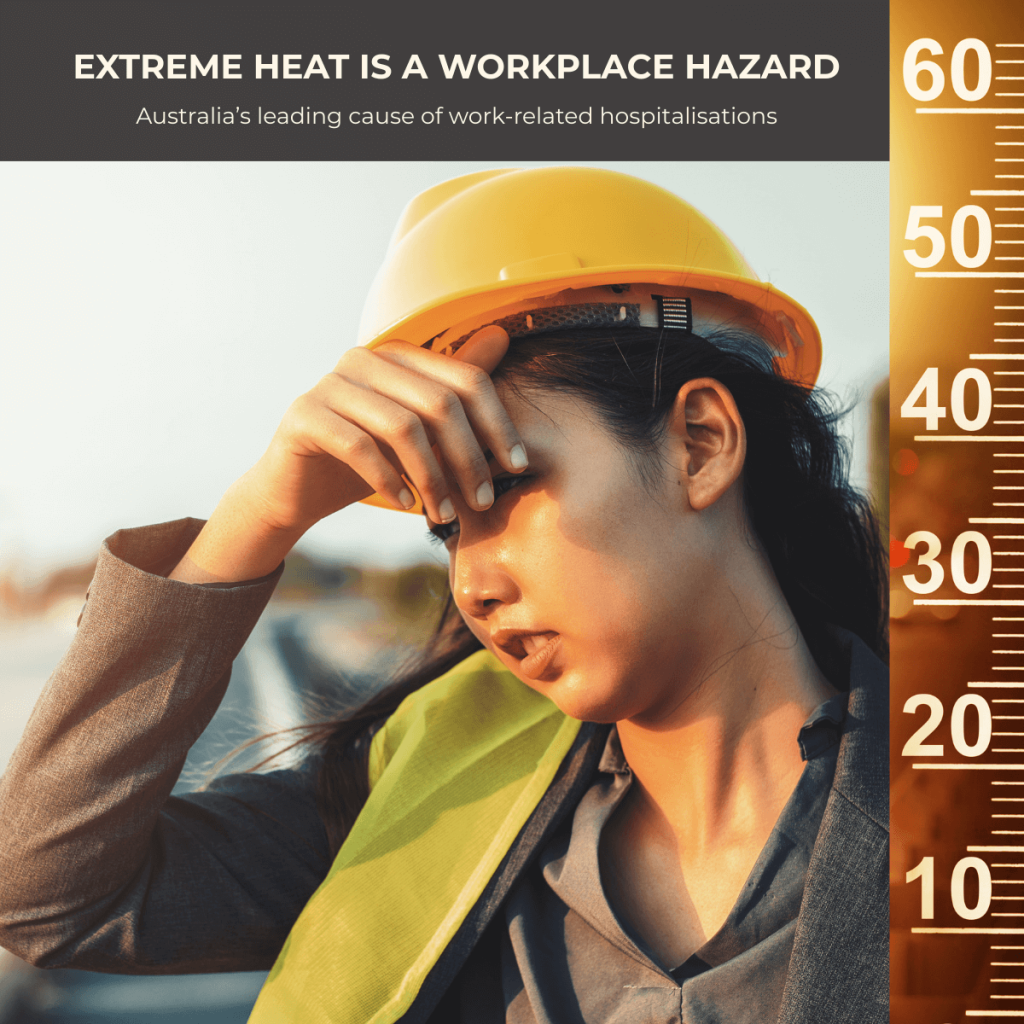
In 2023, excessive heat was recorded as the most common cause of work-related hospitalisations across almost every state and territory in Australia. Yet on many worksites, the response still centres on sunscreen and extra water.
That gap matters.
Heat Does Not Just Cause Heatstroke
When temperatures rise, the real risk often shows up indirectly.
Fatigue increases.
Reaction times slow.
Decision making deteriorates.
Supervisors miss warning signs.
High risk tasks become higher risk.
Heat amplifies existing hazards. It rarely works alone.
Across construction, maintenance, logistics and infrastructure environments, incident reports may reference a fall, plant interaction or procedural failure. But look deeper and fatigue linked to extreme heat is often sitting quietly in the background.
Hydration Is Not a Control Strategy
Providing water is essential. But it is not a heat management plan.
Effective workplace heat management should include:
-
Clear trigger points for modifying or suspending work
-
Adjusted shift start times before peak temperature periods
-
Reassessment of high risk tasks during heat spikes
-
Defined supervision requirements on extreme heat days
-
Specific controls for vulnerable workers and new starters
-
Supervisor training to identify early signs of heat stress
If heat is not formally embedded within your WHS risk assessment process, it remains reactive rather than controlled.
The Leadership Question
The real test is not whether water is available.
It is whether supervisors feel genuinely empowered to pause work when temperatures create unsafe conditions.
Extreme heat places tension on productivity, deadlines and contractual commitments. Leadership is tested when safety controls affect output.
This is where mature WHS systems stand apart.
Now Is the Time to Review
Extreme heat events are becoming more frequent and more intense. Waiting for the next hospitalisation statistic to prompt action is not a strategy.
Review your heat stress risk assessment.
Test your escalation triggers.
Speak with supervisors about what actually happens on high temperature days.
Heat is no longer a seasonal inconvenience. It is a predictable, recurring risk that must be managed like any other critical hazard.
Every worker deserves to return home safely. Even on the hottest days of the year.