New WHS Statistics Reveal Three Critical Risks to Review on Site
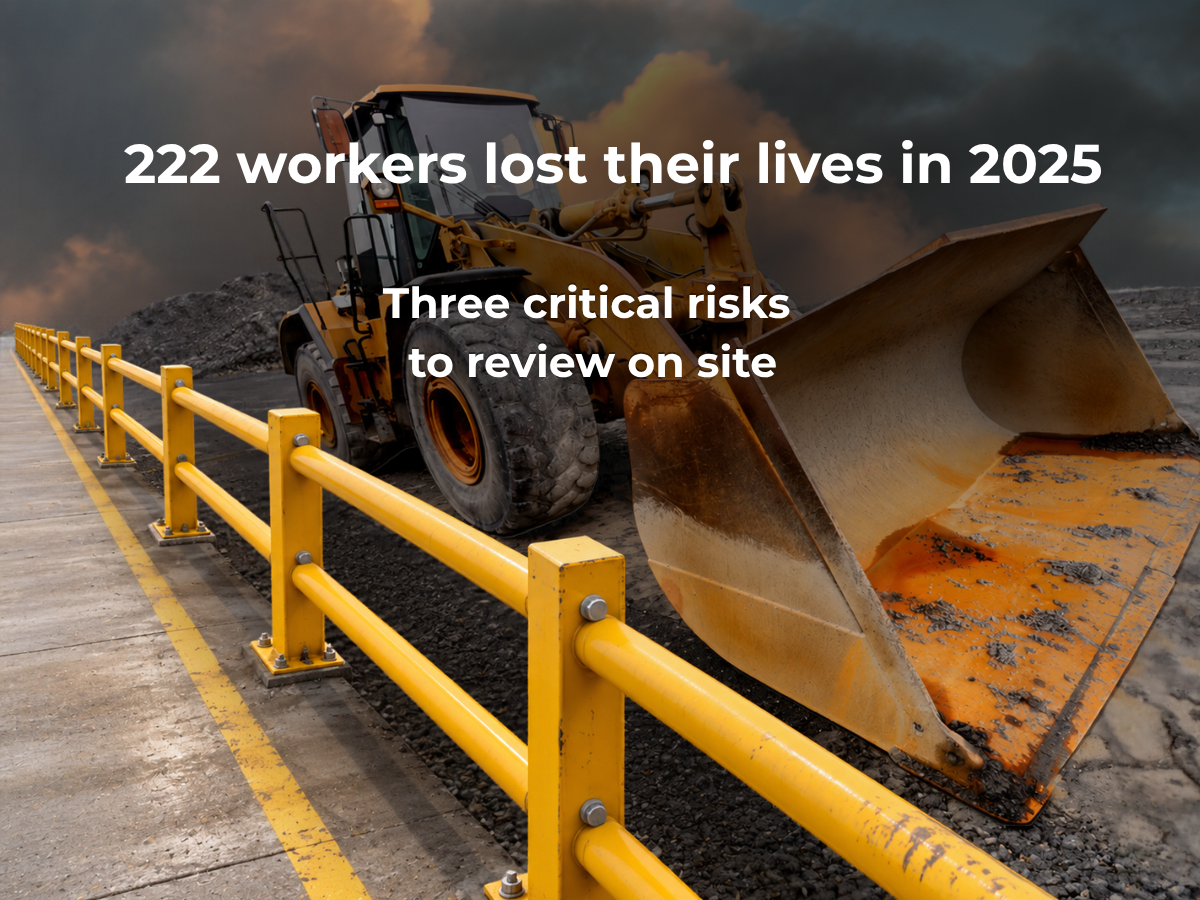
222 workers lost their lives to traumatic injuries at work in Australia in 2025.
Each of those people had a life beyond their job. People who loved them. Plans for after work. Their deaths left families, friends and workmates facing consequences that continue long after an incident investigation is finished.
Released on 12 October 2026, Safe Work Australia’s latest WHS statistics show the highest annual number of worker deaths since 2012, above the five-year average of 197.
It is confronting to see that toll when so much attention is given to better technology, improved equipment and greater safety awareness. Those efforts need to reach the person doing the work, in the conditions they face that day.
The report brings three critical risks into focus for any business where workers could be exposed: vehicle incidents, falls from height and being hit by falling objects.
Three critical risks behind the figures
Across Australian workplaces in 2025:
These are national figures across all industries. Transport, postal and warehousing recorded 61 worker deaths, while construction recorded 41.
For anyone responsible for a workplace, these findings are a reason to look closely at how people are protected during everyday tasks.
1. Vehicle incidents
Vehicles and mobile plant are part of daily work on many sites. Deliveries arrive, loads move and people need to get between work areas. Those movements need careful planning, particularly where people and vehicles could cross paths.
The report’s vehicle incident figure covers occupants killed in collisions involving vehicles such as trucks, cars, loaders, tractors and quad bikes. Workers on foot struck by vehicles or moving plant are counted separately under “being hit by moving objects.” The 41% therefore does not include every death involving vehicles or plant.
When reviewing site traffic, consider whether you can remove the need for people and operating vehicles to share an area. Where that is not possible, provide suitable separation and other physical controls.
Watch a delivery or loading task with the people involved. Can a visiting driver find the right place to stop? Are pedestrians separated from operating plant? Have changes to the layout created a blind spot or a new crossing point?
Ask workers where the arrangements become difficult to follow, and act on what they tell you. A traffic plan needs to work when the site is busy, as well as when it is quiet.
2. Falls from height
In 2025, 28 workers died following a fall from height. That makes protection during the whole task worth close attention, including how workers get to and leave the work area.
Start by considering whether the work can be completed from ground level or a solid construction. Where work at height is needed, prioritise suitable controls that prevent a fall, such as scaffolding, work platforms and barriers.
Walk through the job with the workers before it begins. Look at edges, openings and access points. Check that the equipment and protection suit the task and remain effective as people move and work.
Give workers time and support to raise a problem. If the planned method leaves someone exposed, resolve it before the task continues.
3. Being hit by falling objects
Another 21 workers died after being hit by falling objects in 2025.
The person exposed may be working below, unloading a vehicle or passing an adjoining area. That is why the review needs to include both what could fall and everyone it could reach.
Look at tools and materials on platforms, items in storage, debris and loads being lifted. Secure objects against falling, provide suitable containment and keep people out of exposed areas. Include neighbouring public areas where relevant.
Before a lift or overhead task, confirm that loads are stable and secure and that the arrangements protect people below. Hard hats provide additional protection; preventing an object from falling or reaching someone needs stronger controls.
Make the review matter to the people doing the work
A useful review involves listening as well as looking. Ask workers and supervisors what has changed, what gets in the way of doing the job safely and where they need better protection.
Then follow through. Give each action an owner and a completion date, and return to the work area to confirm the change is in place and working.
If a control needed to prevent death or serious injury is missing or ineffective, stop the affected task and make it safe before restarting.
The people relying on those controls deserve to know that raising a concern will lead to action.
Practical support from Red Insight
At Red Insight, we believe if it’s not used on site, it’s not working.
We help businesses review risks, inspect worksites and improve WHS systems so the people responsible for safety can see where support and action are needed.
If these findings have prompted you to take a closer look at your workplace, book a complimentary 15-minute consultation with Monica or send us an enquiry. We can talk through your concerns and where practical support would help